MUSSELpdb

Taxonomy
Species & Genus Richness of
freshwater mussels
by Taxonomy
Species & Genus Richness of
freshwater bivalves
by Family
Geography
Species Richness & Endemism of
freshwater mussels
by Geography
Introduction to the MUSSEL Project Database (MUSSELpdb)
The Freshwater Mussels (Unionida) of the World (and other less consequential bivalves)
The MUSSEL Project Database (MUSSELpdb, for short) is an online database documenting the diversity of the freshwater bivalves of the world. At present, one can browse through the nomenclature, phylogeny, and diversity at various taxonomic levels — from families down to specimens or search using our custom interface. Images of specimens lots from various collections as well as some literature images are provided.
Browse the MUSSEL Project Database! Navigate the taxonomy hierarchy starting at "Bivalvia" to explore data on the taxonomy, nomenclature, specimen vouchers, phylogeny, and literature on the Freshwater Mussels (Unionida) of the World (and other less consequential bivalves).
Search the MUSSEL Project Database! The MUSSEL Project Database Search Engine (MUSSELpdb-se) can search taxa, localities, and publications by keywords. A Google Search Engine is also available.
What sorts of information does the MUSSELpdb provide?
Current Classification
The database provides a hierarchical framework to browse freshwater bivalve taxonomy. For all taxonomic levels (orders to species), the user can drill down to lower, less-inclusive taxonomic categories. The species-level bottoms out at the individual specimen records.
Historical Classification
At both the genus- and species-levels, an alternative hierarchy is provided to view complete synonymies. This scheme leads to individual nominal species and citations to historical and current species-level circumscriptions of those species nomina.
Geographical Ranges
Geographical information is provided for each species based on specimen records and vouchers associated with Genbank accessions. Georeferenced localities are used to provide a map for each species. A concise range statement is provided for each valid species, and these are summarized for each valid genus.
Genbank Vouchers
Links to Genbank accessions associated with voucher specimens are listed with for valid species, when available. This is an ongoing effort.
Phylogenetic Data
For each genus- and family-group level taxa, a summary of available phylogenetic information (i.e., the Cladome) is provided. More information is available on the Cladomics FARQ.
Links to other Websites
In order to better integrate with other online databse initiatives, we also provide links to the IUCN Red List, NatureServe, Genbank nucleotides, the Integrated Taxonomic Information System (ITIS), and the MolluscaBase (WoRMS). These links can be found with the list of species for each valid genus.
What is not available from the MUSSELpdb?
A Guarantee
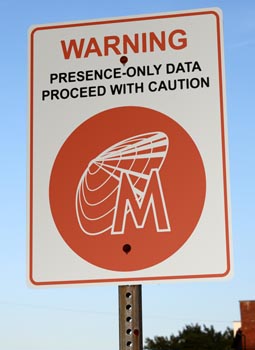 The MUSSEL Project Database is a work in progress. As such, much of the information obtained from secondary bibliographic sources provided herein has not been verified, and different taxa have been researched to varying degrees. In many parts of the database records are far from comprehensive. Browse with confidence but don't be surprised if a few errors have crept in. They will be dealt with in due time. Collection records were generally obtained from the specimen lots themselves, and subsequent comments and re-identifications may have been added. These may not be reflected in the original collections themselves, and their own databases should be consulted.
This web site is intended as a guide to specimen and literature information on freshwater bivalves. Our database has not been peer-reviewed, although the references cited here often have been.
Quantitative Information
Although it is tempting to make inferences, it is inappropriate to use specimen data as more than qualitative records of mussel occurence at the stated localities. If you decide these presence-only data can be used to estimate abundance, etc., then you do so at your own philosophical risk.
Permission to Reproduce Specimen Images
The copyrights to reproduce particular specimen images are retained by the collections from which they were obtained. Inquiries about image use should be addressed to the curators of those collections. We are grateful to be able to use the specimen images as part of this database project.
How should the MUSSELpdb be cited?
Graf, D.L. & K.S. Cummings. [year accessed]. The MUSSEL Project Database: The Freshwater Mussels (Unionida) of the World (and other less consequential bivalves). MUSSEL Project Web Site, https://www.mussel-project.net. Accessed [date of access].
If you made use of this web site and it was helpful, then it would be appropriate to provide a citation. If this website led you to other sources, it would be appropriate to cite them.
Is more information available?
Information about our data model and implementation of the database can be found at the d'Basing page.

