MUSSELpdb

Taxonomy
Species & Genus Richness of
freshwater mussels
by Taxonomy
Species & Genus Richness of
freshwater bivalves
by Family
Geography
Species Richness & Endemism of
freshwater mussels
by Geography
Bivalvia | Unionida | Unionoidea | Unionidae | Unioninae | Anodontini | Cristariina
genus Sinanodonta Modell, 1945: species
5 available nominal genus synonyms (6 total synonyms) | cladomics
Included Species
Sinanodonta angula (Tchang, Li & Liu, 1965)
synonymy (1 available, 1 total) | specimens (0 + 5 GenBank vouchers)
Range: Yangtze, Qiantang, and Pearl rivers, China. (East Asia)
GenBank sequences: 28S, COI, ND1
other links: MolluscaBase
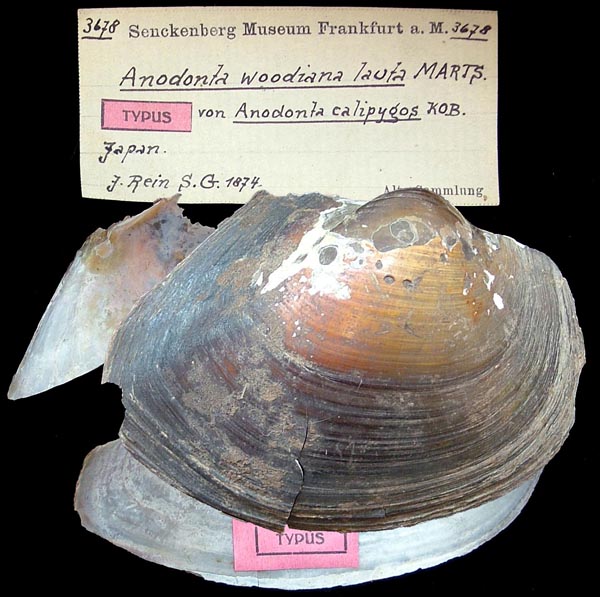
Sinanodonta calipygos (Kobelt, 1879)
synonymy (2 available, 4 total) | specimens (8 + 26 GenBank vouchers)
Range: Lake Biwa and other localities in Honshu and Shikoku, Japan (East Asia)
GenBank sequences: 16S, 28S, COI
other links: MolluscaBase
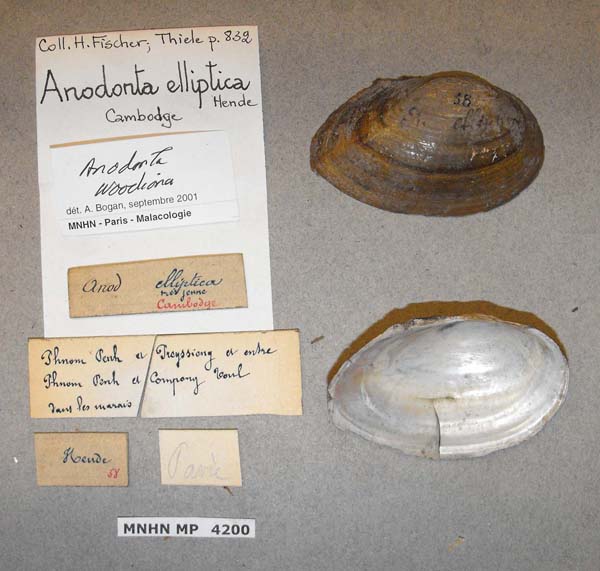
Sinanodonta elliptica (Heude, 1878)
synonymy (1 available, 4 total) | specimens (1 + 15 GenBank vouchers)
Range: China. (East Asia)
GenBank sequences: 28S, COI, ND1
other links: MolluscaBase

Sinanodonta jourdyi (Morlet, 1886)
synonymy (3 available, 4 total) | specimens (20 + 10 GenBank vouchers)
Range: Vietnam and southern China. (East Asia)
GenBank sequences: 16S, 28S, COI
IUCN Red List: Data Deficient (Pilsbryoconcha suilla)
other links: MolluscaBase

Sinanodonta lauta (Martens, 1877)
synonymy (7 available, 10 total) | specimens (7 + 145 GenBank vouchers)
Range: Japan, the Korean Peninsula, and Primorye, Russia. Introduced to the Volga and Yenisei rivers in Russia, as well as Borneo and Iran. (North Eurasia, East Asia)
GenBank sequences: 16S, 28S, COI, COI M-type, Cytb, mtGenome, mtGenome M-type
other links: MolluscaBase

Sinanodonta lucida (Heude, 1877)
synonymy (1 available, 3 total) | specimens (11 + 3 GenBank vouchers)
Range: China and Indochina. (East Asia)
GenBank sequences: 28S, COI, mtGenome, ND1
other links: MolluscaBase
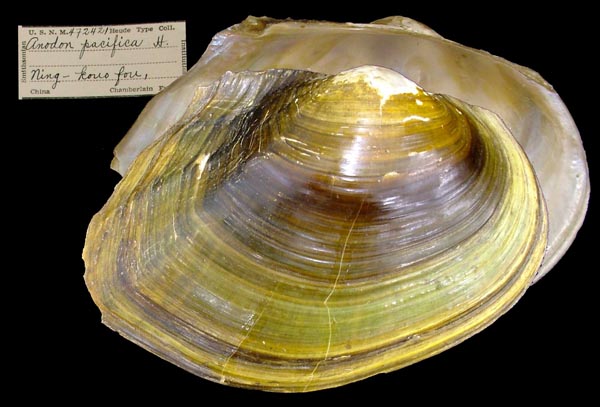
Sinanodonta pacifica (Heude, 1878)
synonymy (9 available, 12 total) | specimens (23 + 34 GenBank vouchers)
Range: Native range in eastern China and Taiwan. Widely introduced in East Asia (Japan and Myanmar to the Sunda Islands and the Philippines) as well as the USA, Central America, and Iraq. (North America, Central America, North Eurasia, East Asia)
GenBank sequences: 28S, COI, mtGenome, ND1
other links: MolluscaBase
Sinanodonta schrenkii (Lea, 1870)
synonymy (7 available, 10 total) | specimens (0 + 27 GenBank vouchers)
Range: Amur and Suifen rivers, Russia, and South Korea. (East Asia)
GenBank sequences: 16S, 28S, COI, Cytb, mtGenome
other links: MolluscaBase

Sinanodonta tumens (Haas, 1910)
synonymy (2 available, 2 total) | specimens (6 + 6 GenBank vouchers)
Range: Lake Biwa basin, Japan. (East Asia)
GenBank sequences: 16S, 28S, COI, mtGenome
IUCN Red List: Data Deficient (Sinanodonta ogurae)
other links: MolluscaBase

Sinanodonta woodiana (Lea, 1834)
synonymy (44 available, 65 total) | specimens (175 + 162 GenBank vouchers)
Range: Native range in the Yangtze Basin in China, but widely introduced in Europe, North Africa, Central Asia, Korea and Myanmar. (North Eurasia, East Asia)
GenBank sequences: 16S, 16S M-type, 28S, COI, COI M-type, COII, Cytb, Cytb M-type, H3, ITS1, mtGenome, mtGenome M-type, ND1, SRA
IUCN Red List: Least Concern
NatureServe: GNR
other links: MolluscaBase
Sinanodonta subundata (Wenz, 1942) (Tertiary)
synonymy (1 available, 1 total) | specimens (0)
Range: Pliocene, Romania.
other links: MolluscaBase

